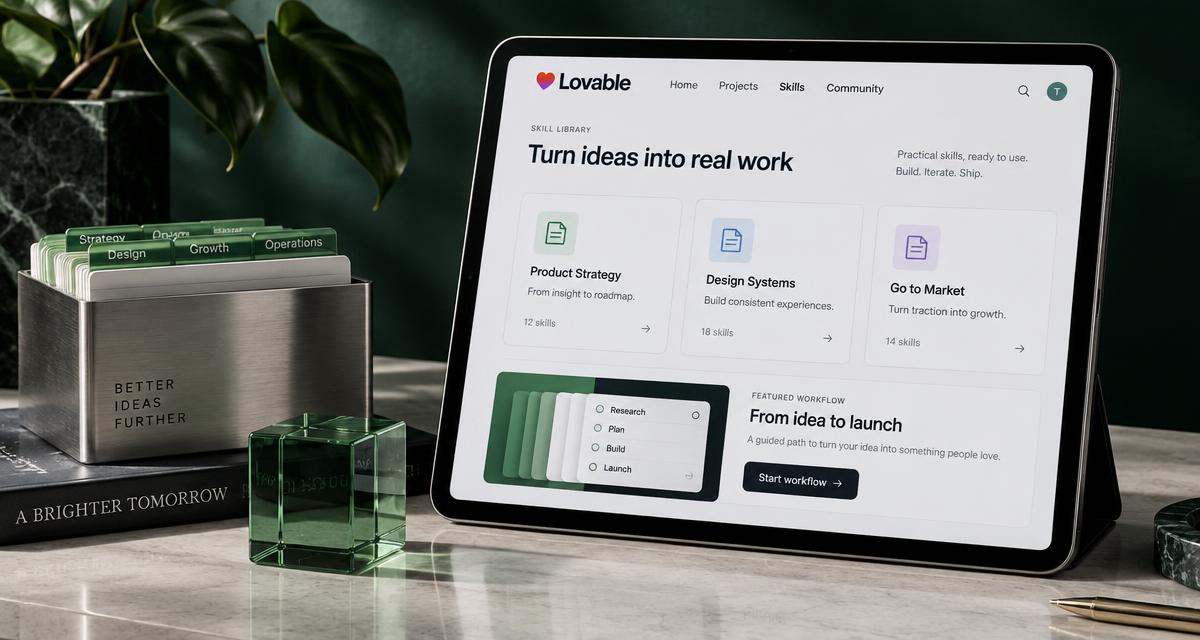
Stop pasting the same operating instructions into every chat. Give an agent a reviewed, versioned skill for one job, then show exactly which instructions it used.
A skill packages instructions, examples and supporting resources. It is not a tool permission or a new model. Progressive disclosure loads a small catalogue first and detailed instructions only when relevant. Build this pattern in a Lovable app for customer-research briefs: select a reviewed skill, collect its required inputs, produce a structured result and keep the skill version with the run. Compatibility with external coding agents requires implementing their format and runtime, not just adding a skills table.
- Versioned skills, resources, test_cases and runs
- Catalogue with name, description and required inputs
- Server-side skill selection and allowed-tool policy
- Run viewer with version, evidence and review status
Use it as an internal operations library or a managed service for repeatable client briefs. Sell reviewed workflows and maintenance, not a promise of autonomous expertise. Measure correction time against your manual baseline.
Prototype first, then evaluate with real briefs
- Start with one skill: turn interview notes into an evidence-backed customer brief. Define required inputs and the expected output schema.
- Save each skill version separately with instructions, examples, resources, allowed tools and review status. Only reviewed versions can run.
- Load names and descriptions into the selector, not every document. Validate the selected skill ID and user access on the server.
- Load the selected instructions and only relevant resources. Keep uploaded material as untrusted data, never as higher-priority instructions.
- Keep runtime tool authorization separate from the skill text. A sentence in a skill cannot grant permission to read another user's files.
- Store skill version, input references and output on every run. Let users inspect sources and correct the result before export.
- Create fixture interviews with known facts. Compare missing evidence, invented quotes and output validity before promoting a new version.
- Offer rollback to the last reviewed version. Block unreviewed imported scripts; do not run arbitrary packages or shell commands.
Build a reviewed skill library for a customer-research agent. Tables: skills, immutable skill_versions, resources, test_cases and runs, scoped to each workspace. Start with one skill that turns interview notes into a structured customer brief with evidence references. Select by catalogue name and description, then load only the chosen reviewed version and relevant resources. Validate selected IDs and user access server-side. Skill instructions cannot override runtime tool permissions. Treat uploaded notes as untrusted data. No arbitrary script execution. Save version and inputs on every run; add evidence review, regression comparison and rollback to a reviewed version.