
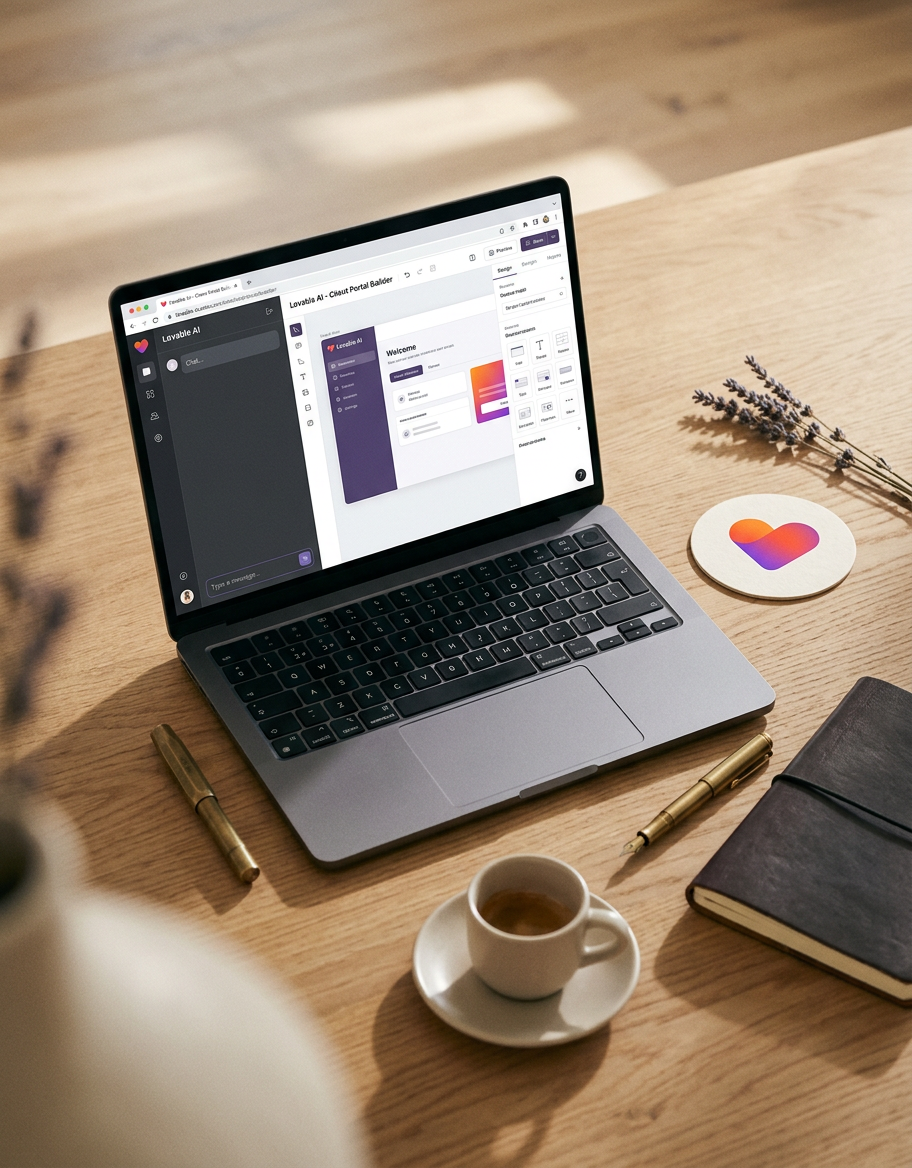
Lovable is the definitive tool for building sophisticated client portals in 2026, combining a flexible UI builder with powerful backend logic and native AI. This lets you create bespoke, self-service apps that automate reporting, streamline approvals, and offer proactive insights, replacing outdated dashboards with true digital products for your clients.
It's 2026. The idea of a "client portal" feels almost nostalgic, like a flip phone. We remember the first wave of tools from the early 2020s - simple wrappers around an Airtable base or a Google Sheet. They were a step up from email chains, sure. But they were fundamentally passive. A place to view things. Another login for your client to forget.
Today, your clients don't just want to see data. They expect to interact with it. They want answers on demand, not in a weekly report. They want to do things - approve content, request support, adjust their service tier - in a single, intelligent interface. They want a product, not a dashboard. And that's precisely why we need to talk about Lovable.
Why Most Client Portals Fail
Most client portals fail because they are built as glorified reporting dashboards, not interactive tools. They present data without context or actionability, quickly becoming a digital graveyard that clients ignore. The core problem is a lack of integration into the client's actual workflow. They are a destination, not a utility.
Think about the typical portal experience. A client logs in to see a few charts pulled from Google Analytics. The numbers are there, but the "so what?" is missing. To ask a question, they have to leave the portal and send an email or a Slack message. To approve a design, they're sent a link to Figma. To see what's next, they have to check a separate project management tool. The portal isn't the hub of the relationship; it's just another silo.
This passivity creates a vicious cycle. Because the portal isn't useful, clients don't log in. Because they don't log in, you don't invest in improving it. It becomes a checkbox item in your sales pitch - "Yes, we have a client portal" - that delivers little real value and eventually becomes a source of frustration. By 2026, this model is not just outdated. It's a liability.
Lovable's Edge: The App-First Mentality
Lovable's advantage is that it forces you to think like an app developer, not a dashboard designer. It's not a "portal builder". It is a full-stack application development platform that uses AI to accelerate the process. This distinction is everything. You're not just displaying data; you're building a stateful, interactive product for your clients.
The magic trio is Lovable's flexible front-end, its robust workflow engine, and its native AI layer. The UI builder lets you design any interface you can imagine, free from the rigid templates of simpler tools. The workflow engine is where the real power lies. It's a visual backend where you can define complex business logic. When a client clicks "Approve", a Lovable workflow can trigger a webhook in Asana, update a CRM record in HubSpot, and send a confirmation Slack message to your team. The portal becomes an active participant in the work.
And then there's the AI. In 2026, AI isn't a gimmick. It's the connective tissue. With Lovable, you can embed AI agents directly into the portal. This moves you from reactive reporting to proactive, conversational intelligence. Your portal doesn't just show a chart; it can interpret it, answer questions about it, and even flag anomalies your team needs to address. You are giving your client a co-pilot for your service.
The Blueprint: Core Components of a 2026 Portal
A modern client portal built on Lovable is composed of several intelligent, interconnected modules. This is the blueprint for building a portal that clients will actually use because it makes their lives easier and gives them unprecedented control and clarity.
Here are the core components:
- The Unified Data Hub: The foundation. A great portal is a single source of truth. Lovable's strength is its ability to connect to anything with an API. You pull in data from your client's Google Ads and Analytics, your agency's CRM like HubSpot, and your project management tool like Linear or Jira. The client sees one seamless view, unaware of the complex data plumbing you've built in the background. They just see their business, simplified.
- The AI Concierge: This is the game-changer. Instead of a static FAQ page, you build a chat interface powered by Lovable's AI. It's trained on your documentation, past project data, and real-time performance metrics. The client can ask: "What was our cost-per-lead last month compared to the month before?" or "When is the next batch of ad creative due for review?" The AI provides instant, accurate answers, freeing up your team from repetitive inquiries.
- Actionable Modules: Every piece of the portal should invite interaction. Don't just show campaign performance; build a "Campaigns" module where clients can see creative drafts, leave feedback directly on the asset, and hit an "Approve" button. That button triggers a Lovable workflow that moves the task forward. Other modules could include:
Onboarding: A step-by-step checklist for new clients that automatically provisions their accounts and schedules kickoff calls. Billing: A space to view past invoices, update payment methods, and even upgrade their subscription plan, all handled by Lovable's backend logic. File & Asset Library:* An intelligent repository, not a messy folder. Files are automatically tagged and linked to specific projects or campaigns.
- The On-Demand Reporting Engine: This is the final nail in the coffin for manual PDF reports. Using Lovable, you can build an interface where clients can generate their own reports. They select the date range, the KPIs they care about, and the channels they want to include. Lovable's backend fetches the data, crunches the numbers, and presents it in a clean, branded report that can be downloaded or shared. You build the engine once, and it runs forever.
Case Study: A Marketing Agency's Transformation
A great example of this blueprint in action is "Momentum Digital", a fictional but representative performance marketing agency. Before Lovable, their client management was a chaotic mix of weekly summary emails, disjointed Slack channels, and manually created slide decks for monthly reviews.
The Problem: Client communication was reactive. Account managers spent nearly a day a week per client just compiling reports and answering basic questions about performance. There was no single source of truth, leading to confusion and a feeling that the client lacked visibility into the agency's day-to-day work. Churn was a concern.
The Lovable Solution: Momentum used Lovable to build the "Momentum Hub", a bespoke client portal that became the central nervous system for every client relationship.
- Unified Dashboard: The landing page for every client is a real-time dashboard showing key metrics like Spend, ROAS, and CPL, pulled live from Google Ads, Facebook Ads, and their CRM.
- AI Analyst: They embedded an "Ask Our AI" chat widget. A client can now ask, "Why did our ROAS dip on Wednesday?" The AI, connected to the ad platforms, might respond: "I see a 30% increase in CPM from the 'West Coast' audience on Wednesday. The team has been alerted and is investigating the audience saturation."
- Creative Approval Workflow: A new "Creative Hub" module shows all ad creatives in development. The client can click on a video, leave time-stamped comments, and click "Request Revision" or "Approve". Approving a creative automatically moves a card in the agency's Asana project from "In Review" to "Approved for Launch".
- Strategy & Roadmap: A simple module that displays the quarterly goals and the key projects the agency is working on to achieve them, pulled from their internal strategy docs.
To make the choice clear, here is how Lovable stacked up against other tools they considered:
| Feature | Lovable | Softr / Stacker (2024) | Custom Dev | | :--- | :--- | :--- | :--- | | UI Flexibility | High (Pixel-perfect control) | Medium (Template-based) | Very High (Code) | | Backend Logic | Very High (Visual workflows) | Low (Simple Airtable/GSheet logic) | Very High (Code) | | AI Integration | Native & Deep | Limited (Requires 3rd party) | Complex (Requires own models) | | Speed to V1 | Days to Weeks | Hours to Days | Months | | Cost | $ (Subscription + Dev Time) | $ (Subscription) | $$ (Salaries) |
Ultimately, Lovable hit the sweet spot between power and speed. It allowed them to build an application with the sophistication of custom code at a fraction of the time and cost.
What's the ROI on a Lovable Portal?
For operators, the key question is always about return on investment. A Lovable portal is not just a cost center; it's a strategic asset that drives tangible business results.
- Dramatically Reduced Churn: The transparency, control, and intelligence of a Lovable portal create an incredibly sticky experience. Clients who feel empowered and informed are far less likely to leave. The portal becomes a key part of your service's value, making it harder for competitors to poach them with a lower price.
- Massive Efficiency Gains: Automating reporting and answering routine questions via AI can save an account manager 5-10 hours per week, per client. This time is reinvested in high-value strategic work, not administrative drudgery. The portal scales your team, allowing you to service more clients without hiring more people.
- New Revenue Streams: The portal itself can be monetized. Agencies can offer a "Standard" portal with basic reporting and a "Premium" portal with the AI concierge, on-demand report generation, and direct integration into their systems. It becomes a new, high-margin product line.
- Powerful Competitive Differentiation: In a crowded market, a slick, intelligent client portal is a killer sales tool. During a pitch, you're not just showing slide decks of past results. You are demoing a live product that the client will get to use. It's a tangible demonstration of your firm's sophistication and client-centric approach.
FAQs: Building Your First Lovable Portal
How much does it cost to build and maintain?
The cost has two parts: the Lovable subscription and the development time. Lovable's pricing is tiered, but for a portal with multiple data integrations and AI features, you should expect to be on a professional-level plan. The main investment is development time. Your first portal might take 40-80 hours to build, depending on complexity. However, the true cost should be weighed against the value it creates in efficiency and retention. Maintaining it is minimal once the core workflows are built.
How difficult is it for a non-technical person?
Lovable is a power tool, so it's more complex than basic website builders. You don't need to be a programmer who writes code, but you do need to be a systems thinker. If you are comfortable with database concepts, API logic, and building complex automations in Zapier, you will feel at home in Lovable. It's designed for the operator, the product manager, and the technical marketer, not necessarily for a complete beginner. The learning curve is real, but the payoff is enormous.
Can Lovable connect to my custom backend?
Yes, and this is a critical feature for established companies. Lovable has first-class support for REST APIs. You can easily have the portal's front-end communicate with your existing proprietary databases or backend services. This allows you to build a modern, AI-powered user experience on top of legacy infrastructure without having to rebuild everything from scratch. It acts as an agile, user-facing layer for your core systems.
The Briefing
The best of Lovable, once a week.
Deep reviews, founder case studies, and growth tactics. No filler.
No spam. One-click unsubscribe.
Build something with us
Start Building with Lovable
Open Lovable, write your first prompt, and ship the thing you have been thinking about for too long.
Start Building with Lovable