
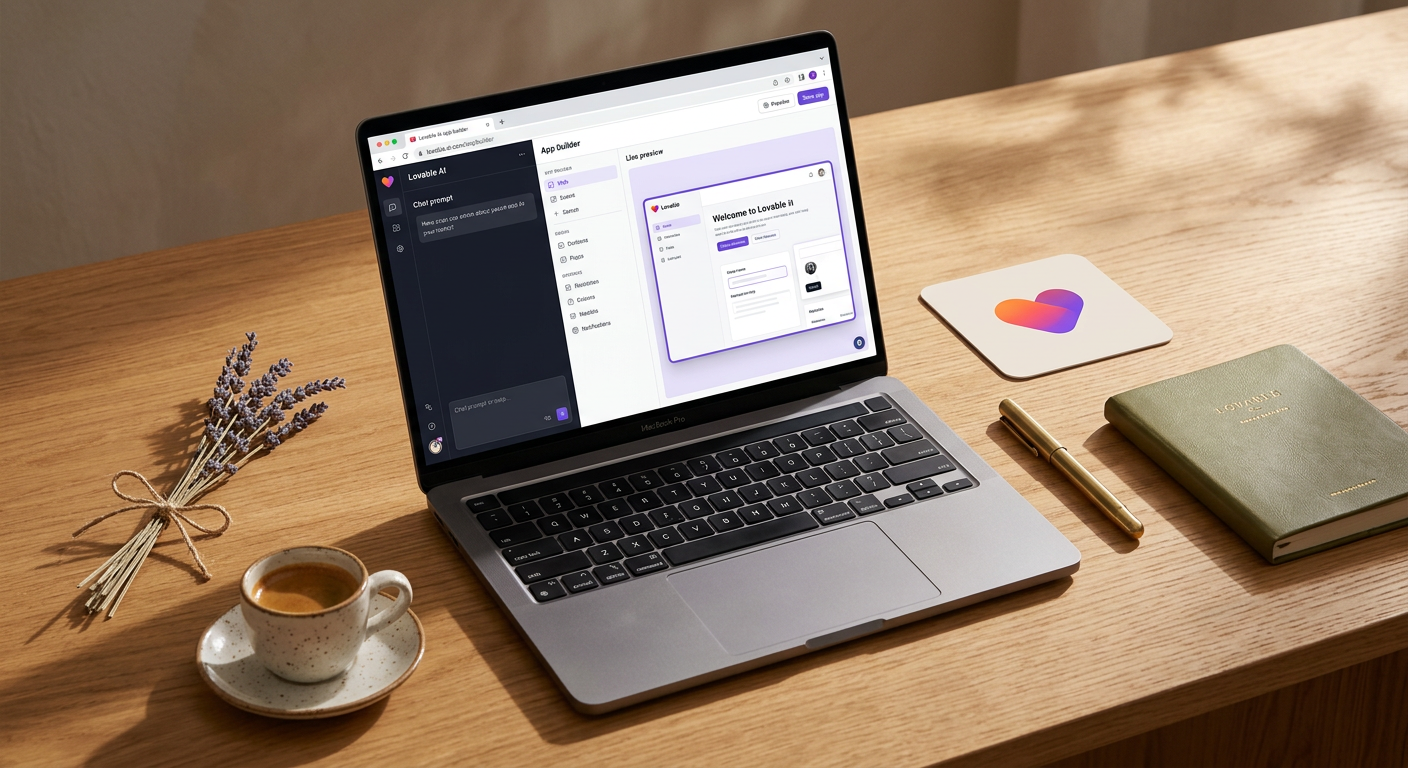
This is the first entry in a series documenting the creation of 'PersonaFlow', a SaaS for generating user personas built with the Lovable AI app builder. In just two weeks, we went from an idea to a functional MVP with user accounts and a database. Now, the focus is on acquiring our first users and validating the market.
It's 2026. Building a SaaS is, in some ways, harder than ever. The market is saturated with niche tools, and customer acquisition costs are brutal. But in other ways, it has never been easier. AI app builders have fundamentally changed the speed of execution for solo founders and small teams. You can now build and launch a functional, AI-powered product in weeks, not months.
So that's what I'm doing. This series is the transparent, no-fluff log of building a SaaS from scratch using Lovable. The goal is to go from $0 to the first milestone of $1,000 in monthly recurring revenue. The product is called PersonaFlow. This is week zero.
The Starting Line: Idea, Stack, and Market
The idea for PersonaFlow came from a real, recurring pain point I've seen in product and marketing teams: creating data-driven user personas is a slow, manual, and often subjective process. Teams either use simplistic templates that offer little value or get bogged down in weeks of research synthesis. There is a clear gap for a tool that accelerates this process without sacrificing quality.
PersonaFlow aims to be that tool. It's an AI app designed to ingest qualitative data - like customer interview transcripts, survey responses, and support tickets - and generate rich, actionable user personas in minutes. The core value isn't just speed. It's about grounding personas in actual customer data, making them a dynamic tool instead of a static document.
Choosing the right stack is critical. For a project like this, the default choice a few years ago would have been a React frontend, a Python backend with FastAPI, and a weekend spent wrestling with Docker. Not anymore. The AI builder space has matured, and for this specific application, Lovable was the obvious choice.
Here's a quick rundown of the landscape in 2026 and why Lovable won out for PersonaFlow:
| Tool | Primary Use Case | Why Not for PersonaFlow? | | :--- | :--- | :--- | | Lovable | Data-heavy AI workflows & full-stack apps | N/A - It's the right fit. | | v0.dev | AI-generated UI components | It's a fantastic UI accelerator, but not a full-stack builder. It generates code, it doesn't run the backend. | | Bolt | Autonomous AI agents & complex orchestrations | Bolt is built for agentic systems. It's overkill for a structured workflow like 'data in, persona out'. | | Cursor | AI-native code editor | Cursor is an IDE, not a no-code/low-code platform. It helps you write code faster, but Lovable helps you avoid writing code at all. |
Lovable is the sweet spot. It provides a visual canvas for building complex AI chains, integrated vector databases, native user authentication via partners like Clerk, and a surprisingly capable UI builder. It's the Webflow for AI-native applications. It lets me focus on the product logic, not the boilerplate.
Week 1: From Prompt to a Working Prototype
The first week was about proving the core concept and building a functional, if ugly, prototype. The goal was simple: can I create an AI workflow in Lovable that takes raw text and produces a structured persona? The answer, thankfully, was yes.
The entire backend logic was built on Lovable's visual workflow canvas. It looks something like this:
- Input: A simple UI with a large text area where the user can paste their raw data (e.g., interview notes).
- First Pass AI: The text is fed to a 'Summarizer' node, which uses a model like Claude 4 Haiku to distill the key information and clean up the input.
- Data Extraction AI: The summary is then passed to a second AI node. This one has a much more complex prompt engineered to extract specific, structured information: demographics, goals, pain points, motivations, and key quotes. The key here is forcing the model to return a predictable JSON object.
- Persona Generation AI: The structured JSON from the previous step is fed into a final, powerful model (I'm using Claude 4 Opus for this). This model's job is to take the structured data and weave it into a narrative, generating the final, human-readable persona description.
- Output: The results are displayed in a simple card layout. No database, no user accounts. Just pure, stateless execution.
Honestly, the hardest part was the prompt engineering for step 3. Getting a consistently structured JSON output from messy text took about a dozen iterations and a lot of trial and error. You learn to 'talk' to the model, giving it clear examples and constraints. The initial cost for this week was effectively zero - just my time, a few dollars in API credits on Lovable's free plan, and a lot of coffee.
Week 2: Shipping an MVP with Real Features
Week two was about transforming the prototype into a minimum viable product (MVP) - something a real user could sign up for and use. This meant adding two critical components: user authentication and a persistent database.
This is where platforms like Lovable truly shine. What would have taken me a week of coding took about a day of configuration.
- Authentication: I used Lovable's native Clerk integration. Setting up sign-up, login, and user management was a matter of connecting my Clerk account and dragging a few pre-built components onto the page. Total time: maybe two hours. This is a massive leap in productivity. User auth is solved.
- Database: The prototype's stateless nature had to go. I needed a real database to store user data and the personas they generate. I chose Neon, a serverless Postgres provider. Lovable has a built-in SQL Connector node, so linking the Neon database was straightforward. I wrote a few simple SQL queries inside Lovable to create, read, and list personas associated with a logged-in user. The schema is simple for now: a `users` table, a `projects` table, and a `personas` table with a foreign key to the user.
With these pieces in place, I spent the rest of the week on some basic UI/UX improvements. I added a sidebar for navigation between a dashboard and the generation page. I organized the output into tabs: 'Overview', 'Goals & Pains', and 'Source Data'. It's still not going to win any design awards, but it's clean, functional, and ready for feedback.
By the end of week two, PersonaFlow was a real, usable web app. Total MRR: $0. But the foundation is laid.
The Plan: Getting the First Users and First Dollars
The focus now shifts from building to selling. The go-to-market plan for finding the first 10 users and hopefully the first paying customer is a direct, manual grind. There are no silver bullets here.
- Warm Outreach: I have a list of 25 contacts - product managers, UX researchers, and marketers I've worked with or know professionally. They will each get a personal email with a link to the app, offering free, lifetime access in exchange for 30 minutes of their time for a feedback call. The goal is to get 5-7 of these people actively using it.
- Community Engagement: I'm not going to spam Reddit or Indie Hackers with 'Check out my new app!'. Instead, I'll find discussions about user research and persona creation in places like r/productmanagement. I'll offer genuine advice and, only where it's truly helpful, mention the tool I'm building to solve that exact problem.
- Build in Public: This blog post is a core part of the strategy. Documenting the journey creates accountability for me and, hopefully, provides value for others. An audience of fellow builders can be a powerful source of early adopters and champions.
As for pricing, I'm keeping it simple. There will be a free tier that allows for 3 persona generations. The 'Pro' plan will be $19/month for unlimited generations, project organization, and future features. The immediate goal is not to get rich. It is to get one person - just one - to find enough value in PersonaFlow that they are willing to enter their credit card details. That will be the single most important validation milestone.
FAQ: Can you really build a full SaaS in Lovable?
Yes, for a significant class of AI-native applications, you absolutely can. Lovable handles the frontend UI, backend business logic, AI model integration, and database connections. With its native integrations for things like authentication (Clerk) and payments (Stripe), you can assemble a complete, production-ready SaaS without writing a line of traditional backend code. You might eventually hit a wall for some hyper-custom feature, but you can get to $10k MRR and beyond before that's a real concern.
FAQ: What does this stack cost to run?
Right now, the cost is incredibly low. Lovable has a generous free tier that I'm still on. Clerk's free tier covers up to 10,000 monthly active users. Neon's free tier for Postgres is more than enough for the early days. The only real variable cost is the AI model usage, which is passed through Lovable. For the first few hundred users, the total monthly bill should be well under $50. This low-cost structure is what makes building a lean startup in 2026 so feasible.
FAQ: What's the biggest challenge so far?
The biggest challenge is not technical; it is psychological. The technical part, thanks to Lovable, has been fast and exciting. The real challenge is the classic founder's dilemma: fighting the urge to keep adding 'just one more feature' before showing it to anyone. The hard part is stepping out of the comfortable world of building and into the uncomfortable world of selling and seeking feedback. The tool is ready enough. Now comes the real test.
The Briefing
The best of Lovable, once a week.
Deep reviews, founder case studies, and growth tactics. No filler.
No spam. One-click unsubscribe.
Build something with us
Start Building with Lovable
Open Lovable, write your first prompt, and ship the thing you have been thinking about for too long.
Start Building with Lovable